If you’re responsible for keeping a production line moving smoothly, the right rollers can make a world of difference. Steel rollers are renowned for their durability, load-bearing capabilities, and long service life, especially in demanding environments. In this guide, we’ll walk through how to select the best steel rollers for your specific needs, with practical tips you can apply today.
Choosing the right equipment starts with understanding your process. Are you transporting heavy items on a busy conveyor, or handling delicate goods that require gentler support? Do you operate in a wet environment, or one with dust and debris? Answering these questions helps narrow the field and ensures you invest in a solution that stands the test of time.
What to consider when selecting steel rollers
Material and finish
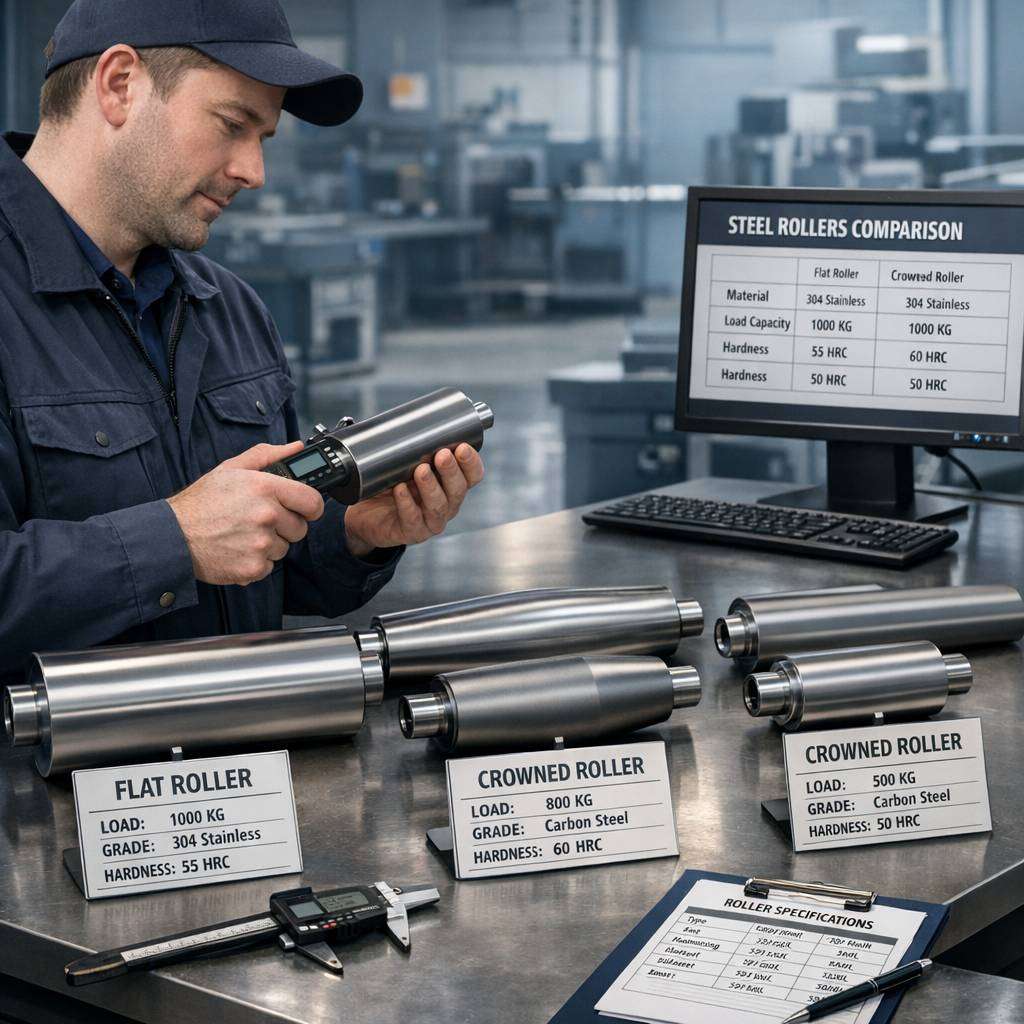
- Steel rollers come in various grades and finishes. For most heavy-duty industrial applications, carbon steel or stainless steel offers excellent strength and durability.
- If your line runs in a washdown area or exposure to moisture is frequent, stainless steel or coated steel with a corrosion-resistant finish is advisable.
- Consider a finish that reduces slip and wear. A bright finish can be easier to clean, while a hardened or case-h hardened surface may extend life in high-friction scenarios.
Diameter and length
- Roller diameter and length should match the conveyor frame and the product width. Larger diameters often roll more smoothly under heavy loads and are less prone to jamming, but they may require more space.
- Ensure compatibility with your existing conveyor roller frames. If you’re upgrading, check the axle bore size, shoulder length, and mounting type.
Load capacity and speed
- Calculate the total static load (weight of the product plus the live load of the roller) and the dynamic load (case to case, depending on acceleration and braking). Steel rollers can handle substantial loads, but exceeding rated capacity leads to premature wear.
- Consider the operating speed. High-speed conveyors demand tight tolerances and robust bearings to minimise vibration and noise.
Environment and maintenance
- If your line carries aggressive chemicals, consider corrosion-resistant options or protective coatings.
- In dusty or dirty environments, look for rollers with easy-clean surfaces and sealed bearings to minimise downtime.
- Maintenance-friendly designs, such as quick-release end caps or modular assemblies, reduce downtime during inspections and replacements.
Bearings and support
- The bearing type integrated into steel rollers affects longevity and smoothness. Cash-in options include sealed ball bearings or oil-impregnated bearings for challenging environments.
- End bearings and housings should be compatible with your conveyor frames. Misalignment can cause uneven wear and reduced efficiency.
Surface finish and grip
- Conveyor systems often require a balance between grip and slippage. For delicate items, a slightly textured or coated surface can provide controlled handling without damaging products.
- If you’re running plastic or more fragile materials, consider roller profiles that minimise marking or indentation.
Choosing between steel rollers and alternatives
- Steel rollers excel in high-load, high-wear settings and where longevity is the priority. They’re common in conveyor rollers UK installations and across UK rollers markets.
- For lighter loads or highly corrosive settings, plastic conveyor rollers or composite options may be more cost-effective and offer adequate performance.
- Conveyer rollers with steel cores can be paired with polymer coatings to reduce wear and noise while maintaining strength.
Practical tips for procurement
- Benchmark with your peers: Speak to suppliers who specialise in conveyor rollers UK deployments. A trusted supplier will tailor recommendations to your sector, whether it’s manufacturing, packaging, or logistics.
- Check compatibility: When replacing rollers, confirm the exact axle diameter, mounting type, and the overall frame compatibility to avoid fit issues.
- Seek modular solutions: If your operation routinely changes line configuration or product sizes, modular steel rollers with interchangeable end caps can save time and money.
- Longevity vs. upfront cost: While steel rollers may have a higher upfront cost than some alternatives, their longevity often translates into lower lifecycle costs. Factor in downtime, maintenance, and energy use when evaluating total cost of ownership.
Where to source and what to look for in a supplier
- Look for reputable brands and distributors offering a range of steel rollers, including options for conveyor rollers UK and uk rollers. A broad product line, including plastic conveyor rollers, can simplify sourcing if you need mixed material solutions.
- Ask for technical data sheets: Verify load ratings, approved operating speeds, tolerances, and installation guidelines. Quality documentation helps prevent misfit and performance issues.
- Inquire about after-sales support: Training, installation advice, and spare parts availability reduce downtime and extend system life.
- Request samples or test runs if possible: A short trial can confirm whether the rollers meet grip, noise, and wear expectations in your specific application.
Maintenance mindset for longer life
- Establish a preventive maintenance schedule: Regular inspection of bearings, lubrication points, and mounting integrity keeps rollers performing optimally.
- Cleanliness matters: Debris can accelerate wear on steel rollers. Incorporate routine cleaning into your maintenance plan, especially in dusty or dirty environments.
- Replace in matched sets: When one roller shows wear, replacing paired units helps maintain consistent tracking and performance.
By understanding your application, selecting the right steel rollers, and partnering with a knowledgeable supplier, you’ll optimise throughput, reduce downtime, and extend the life of your conveyance system. Whether you’re browsing conveyor rollers UK options or exploring uk rollers for a bespoke solution, the right choice is the one that fits your process, budget, and future needs. And if you’re choosing between steel rollers and plastic alternatives, remember that mix-and-match configurations can sometimes offer the best balance of strength, cost, and performance.
Steel rollers are key components in precise, high-load machinery, delivering smooth motion and consistent performance. When selecting steel rollers, consider hardness, wear resistance, and surface finish to extend service life in demanding environments. For reliable options, explore protective coatings, corrosion resistance, and compatible shafting. This focus ensures reduced maintenance and downtime. https://www.kastalon.com/product-category/roller-sleeves/ By choosing quality steel rollers, you optimize efficiency, achieve accurate alignment, and support long-term reliability in industrial applications.
Steel rollers are essential components in modern manufacturing, offering durable performance and smooth material handling across numerous applications. They reduce friction, extend equipment life, and enhance production efficiency in conveyors, textile machines, and automation systems. When selecting components, consider load capacity, hardness, and corrosion resistance to maximize reliability. For specialized needs, explore premium options and expert guidance. In the second half, learn more at https://www.woodsage.com/specialty-rollers/.
steel rollers help manufacturers improve durability and efficiency in material handling systems. These high-strength components reduce maintenance, support heavy loads, and ensure smooth operation across conveyors, presses, and automated lines for reliable, long-lasting performance.
Steel rollers are essential components in robust material handling systems, delivering reliable performance under heavy loads and continuous operation. With precision engineering, they reduce friction, minimize wear, and boost overall efficiency. For durable, cost-effective solutions, consider high-grade steel rollers tailored to your specific application. Explore options and expert guidance at your disposal: https://conveyorrollers.co.uk. By choosing the right rollers, you ensure smooth transport, lower maintenance, and extended equipment life for your conveyor line’s demanding demands.
Steel rollers provide durable, smooth performance for conveyors and material handling systems. When choosing components, prioritizing precision, load capacity, and longevity reduces downtime and maintenance. For reliable replacements and compatibility, explore trusted options that match your setup and industry standards. https://www.ultimationinc.com/replacement-parts/24v-mdr/buy-itoh-denki/itoh-denki-motorized-conveyor-rollers-dia-17bf/