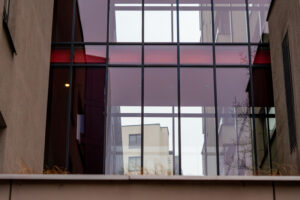
A pane cracks in an atrium roof at five on a Friday afternoon. There’s glass over a public space, so the building has a safety problem, and the call that follows is one of the more expensive phone calls in facilities management.
Nobody is surprised that emergency work costs more than planned work. What surprises people is where the money goes, because the glass is rarely the main item on the invoice.
What you’re paying for on the night
The first response usually isn’t a repair at all. It’s making the area safe: establishing an exclusion zone below, getting someone up to assess whether the pane is stable, and either leaving it with the zone in place or taking it out and fitting a temporary cover.
That means a team mobilised outside working hours, with the access equipment that the building happens to need. Access is the dominant cost on almost every atrium job and it doesn’t shrink because the job is urgent. A platform hired at short notice, or a rope team called in on a Friday evening, costs what it costs regardless of whether one pane or twenty are being dealt with.
Out-of-hours labour sits on top of that. So does the building’s own cost: security presence, a fire watch if any hot works are involved, and the floor area below taken out of use for however long the zone stands.
Then there’s the temporary weathering. A cover over an opening in a roof has to keep water out and stay put in wind, and it has to look tolerable for weeks while a replacement unit is made. That’s a small piece of work with a real cost attached, and it gets paid for twice, since it has to come off again.
The permanent repair is a separate bill
This is the part that catches building owners out. The emergency visit stabilises the situation. It almost never finishes the job.
Replacement units for atrium roofs are made to measure. Coated or laminated glass in a non-standard size takes weeks, and that lead time starts after the survey, not after the phone call. So the sequence is emergency attendance, survey, order, wait, then a second mobilisation of access to fit the new unit.
Two access charges for one cracked pane. That’s the shape of an emergency on a glazed roof, and it’s why the total lands so far above what the glass is worth.
Why some buildings pay far more than others
The variance between buildings is larger than the variance between incidents, and most of it is decided long before anything breaks.
A building with current drawings and a recent survey gets a faster, cheaper response, because the contractor knows what glass is up there and what the access constraints are before they arrive. A building with nothing on file pays for discovery at emergency rates.
Floor loading is the classic unknown. If nobody has ever established whether the lobby slab will take a platform, that question gets asked at seven in the evening with a cordon round the reception desk, and the answer may be no.
Anchor points matter the same way. A building maintenance unit that exists but hasn’t been tested is not available in an emergency, and neither are anchor points with no current test certificate. The access planning obligations under the Work at Height Regulations don’t relax because the situation is urgent.
Access to the atrium itself can be the blocker. Materials routes through a finished lobby, lift sizes, door widths, and whether a platform can physically get to where it needs to stand.
What reduces the bill
A standing arrangement with a contractor who already knows the building is the single biggest lever. Pre-agreed rates, a survey on file, drawings, access method established, anchor test certificates current. The response is faster and nothing is being worked out from scratch at a premium.
Keeping the records is the cheap half of that. Glass make-up, coating type and which face it’s on, unit sizes against a pane numbering plan. Where that exists, an order can go in the next morning rather than after a survey.
The Centre for Window and Cladding Technology publishes guidance on inspecting and maintaining glazed envelopes, which is a sensible basis for the regime. Planned inspection is the part that prevents the call-out happening. Cracks propagate, seals fail progressively, fixings loosen over seasons, and most of what turns into an emergency was visible months earlier at close access. The habit of inspecting while the glass is being cleaned catches a lot of it, provided the findings get written down in a form someone reads before the next visit.
Contractors who hold the glazing trade and the access capability together, like Sky Access Glazing, tend to respond faster out of hours, because there’s no second firm to find at six on a Friday. Whether the glass specified in the first place was right for the building is a separate question, and how glazing products affect energy performance in commercial projects covers the specification side of it.
The practical thing to do before any of this happens is to find out whether your atrium has a current access method and a tested anchor arrangement. If it doesn’t, the first hour of your next emergency goes on establishing that, at the worst possible rate.