If you’re sourcing a reliable belt conveyor manufacturer, reliability and efficiency should be your top priorities. A trusted partner delivers tailored solutions, durable components, and accurate project timelines. Look for industry experience, strong warranty terms, and responsive support to keep operations running smoothly. You’ll also want cost-effective options without compromising quality. For comprehensive conveyor solutions and expert guidance, connect with a leading provider at https://conveyorrollers.co.uk. Their team specializes in durable, customized systems for various industrial applications.
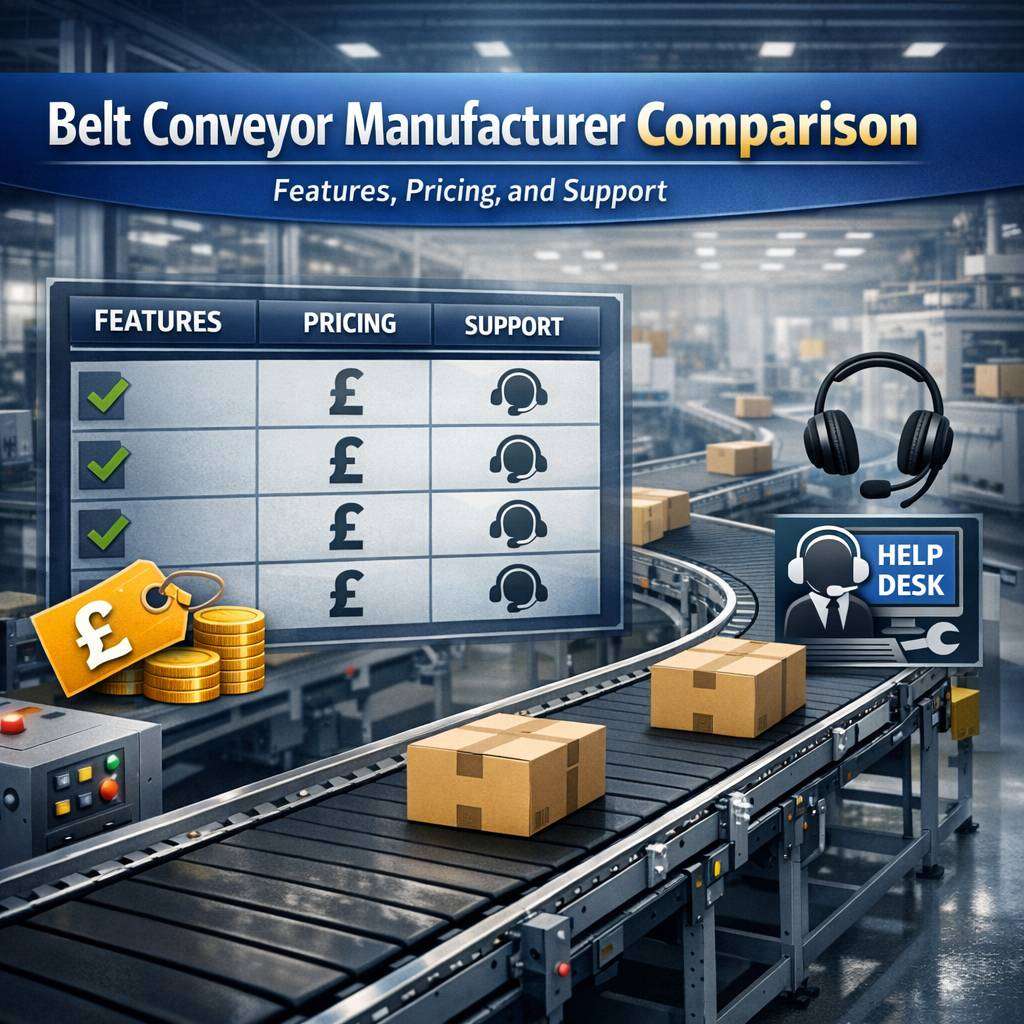
When choosing a belt conveyor manufacturer, you want a partner who understands your needs, offers reliable hardware, and provides solid aftercare. This comparison guide covers key features, pricing considerations, and support options for belt conveyor systems, with a practical emphasis on different applications—from agricultural setups to heavy industrial environments.
Features to prioritise when evaluating belt conveyor manufacturers
- Versatility of the belt conveyor design: Look for options such as modular belt conveyor systems that can be customised for varying widths, speeds, and loading conditions. A versatile industrial belt conveyor should accommodate different drive types, belt materials, and profile options to suit your process.
- Build quality and durability: Industrial environments demand robust construction, corrosion resistance, and proven wear life. For belt conveyors used in harsh settings, inspect motor output, drive pulleys, and tensioning mechanisms.
- Integration capability: The best manufacturers offer seamless integration with other equipment in the facility—sortation systems, transfers, and lifting devices. If you operate a warehouse belt conveyor or a production line, compatibility with warehouse management systems (WMS) and automation controls can save time and reduce errors.
- Hygiene and cleanability: In agricultural belt conveyors or food handling contexts, consider designs with easy cleaning, minimal crevices, and smooth belt surfaces that meet regulatory standards.
- Maintenance and spare parts: Quick access to spare parts, clear maintenance schedules, and remote diagnostics can minimise downtime. Some providers offer predictive maintenance programmes and remote monitoring for belt conveyors for sale.
- Energy efficiency: Look for low-energy drives, regenerative braking options, and modular configurations that can be tuned to your load profile, reducing operating costs over the system’s life.
- Compliance and safety: Ensure the supplier’s equipment meets relevant standards and certifications. Features such as emergency stop devices, guarding, and belt misalignment detection contribute to safer operations.
Pricing considerations for belt conveyor systems
- Upfront versus total cost of ownership: The initial purchase price is important, but consider installation, commissioning, and the cost of integration with existing lines. Modular belt conveyor configurations can offer scalable costs depending on the configuration, reducing upfront expenditure for expanding capacity later.
- Customisation vs standard models: Standard models tend to be cheaper and readily available as belt conveyor systems for sale. If your process requires custom lengths, special belt materials, or unique drive arrangements, expect additional cost and lead time.
- Material and belt choices: The belt material (PVC, polyurethane, silicone, or specialised rubber) influences price, wear resistance, and cleanliness. In wet or oily environments, a compatible belt type will impact both performance and long-term expense.
- Drive and motor options: Choices between labelled asynchronous motors, servo drives, or variable frequency drives (VFDs) affect pricing. More sophisticated motor control can reduce energy use and offer smoother speed control, but initial costs may be higher.
- Installation and commissioning: Some manufacturers include site visits, training, and commissioning in the package; others bill these as separate line items. Clarify who conducts assembly, alignment, and start-up procedures.
- Spare parts and warranty: Longer warranties provide peace of mind but may be bundled with higher initial costs. Check the availability of compatible spare parts worldwide and the lead times for replacements.
- Lifecycle support: Some suppliers offer tiered maintenance contracts, consumables, and upgrade pathways. These agreements can substantially influence lifetime affordability and system uptime.
Support and aftercare from belt conveyor manufacturers
- Technical support access: A strong manufacturer should provide accessible technical support, including phone, email, and online portals. Rapid responses during commissioning and peak production periods are essential.
- Training and handover: Look for comprehensive onboarding, operator manuals, and maintenance guides. Some suppliers offer on-site training or virtual sessions to ensure your staff are confident with the equipment.
- Remote diagnostics and monitoring: For industrial belt conveyor systems, remote monitoring can help identify issues before they escalate. This also ties into predictive maintenance programmes, reducing unplanned downtime.
- Spare parts availability: A reliable supply chain for spares—belts, rollers, bearings, and drive components—is crucial. Confirm typical lead times and whether the vendor can ship globally.
- Upgrades and scalability: As your operation grows, you may need to extend capacity or upgrade to more energy-efficient drives. Suppliers with modular belt conveyor options and upgrade pathways can protect your initial investment.
- Documentation and compliance: Ensure you receive thorough warranty terms, safe operating procedures, maintenance schedules, and certified drawings. Having robust documentation can simplify audits and regulatory checks.
A reliable belt conveyor manufacturer supports efficient material handling across industries, delivering solutions that boost productivity and uptime. From design to installation, expert teams tailor equipment to precise specifications, minimizing maintenance and maximizing throughput. By choosing a trusted partner, you gain technical support, robust components, and durable performance under demanding conditions. For more details, visit the supplier’s resources and find compatible systems. conveyorrollers.co.uk
Practical considerations for different applications
- Agricultural belt conveyors: Prioritise gentle handling, easy cleaning, and resistance to dust and biofouling. Look for modular designs that can be reconfigured for seasonal workflows or different crops.
- Warehouse belt conveyors: Focus on throughput, low maintenance, and integration with sortation systems or automated storage and retrieval. Guarding and safety features become critical in high-traffic environments.
- Industrial belt conveyors: Emphasise durability, high load capacity, and compatibility with existing automation stacks. Variable speed drives and robust frame construction help manage diverse process steps.
- Conveyor belt conveyor configurations: If your process requires belt tensioning adjustments, choose systems with straightforward, tool-free tensioning and accessible pulley arrangements.
- Belt conveyors for sale: When comparing vendors, verify delivery timelines, post-sales support, and the availability of turnkey installation services to minimise downtime.
In summary, choosing the right belt conveyor manufacturer involves balancing features, cost, and support. By prioritising design versatility, durability, and integration capabilities, you can select a system that remains efficient across agricultural, industrial, and warehouse environments. Whether you are exploring belt conveyor systems for sale or evaluating specific models for an upcoming project, a thoughtful vendor comparison will help you secure a solution that delivers reliable performance today and flexible options for tomorrow.