Conveyor systems have become the unsung heroes of modern industry, quietly moving goods from one process to the next with reliability and efficiency. As an expert in material handling, I’ve seen how the right conveyor solution can transform productivity, worker safety, and space utilisation. This guide provides a clear overview of the main types of conveyors, their best-use scenarios, and the benefits they bring to a wide range of operations.
What a conveyor is and how it works
At its core, a conveyor is a mechanism that transports materials from one location to another with minimal manual intervention. Components typically include a belt, roller, chain, or screw driven by a motor, plus controls that coordinate speed, direction, and integration with other equipment. The choice of conveyor depends on factors such as the size and weight of the items, the desired speed, the environment, and the level of automation desired.
Major types of conveyors
Conveyor systems streamline production, boost efficiency, and reduce manual handling across industries. For visual effects enthusiasts, mastering a looping conveyor belt style can elevate project realism. Check this resource: https://community.adobe.com/t5/after-effects/looping-conveyor-belt-style-in-after-effects/m-p/11492450 to learn practical techniques.
Conveyor systems streamline production lines, boosting efficiency and consistency across tasks. This versatile concept integrates sensors, automation, and ergonomics to reduce manual handling and errors. For developers seeking integration options, explore tools and extensions that enhance workflow management. https://marketplace.visualstudio.com/items?itemName=vs-publisher-1448185.ConveyorbyKeyoti
Belt conveyors
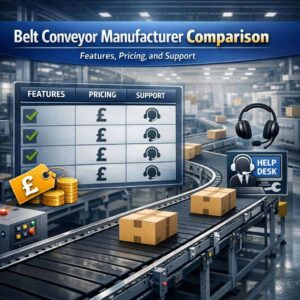
Belt conveyors are among the most versatile and widely used. A continuous belt, driven by rollers or a motor, carries items along an adjustable incline or decline. They are ideal for unitised loads such as boxes, cartons, and totes. Variants include troughed belts for stabilising bulkier items and curved belt sections for navigating around corners.
Roller conveyors
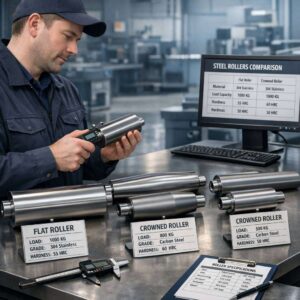
Roller conveyors rely on a series of rollers around which items glide. They are excellent for transporting heavy or bulky products with minimal friction. Powered roller conveyors add drive to move items without the need for a belt, while gravity conveyors use the weight of the load to propel products along a slight incline. Roller conveyors are common in palletised goods handling and carious flow-line operations.
Chain conveyors
Chain conveyors use linked chains to convey heavy or irregularly shaped loads. They’re robust and well-suited to applications requiring positive control, such as lifting, accumulating, or transporting items through vertical space. They’re often found in automotive, manufacturing, and packaging environments where precise movement is essential.
Screw conveyors
Screw conveyors, or auger conveyors, employ a rotating screw within a tube to move bulk materials like grains, powders, or granules. They are highly effective for bulk handling, dosing, or feeding processes where a consistent, controllable flow is required. Their enclosed design helps minimise contamination and dust.
Conveyors streamline material handling, boosting efficiency and accuracy across manufacturing and logistics sites. A reliable conveyor system reduces manual lifting, speeds up processing, and minimizes downtime. Businesses choose tailored solutions for durability, maintenance, and scalability. For more information on high-quality solutions, visit the specialist provider. https://conveyorrollers.co.uk This resource offers expert guidance, dependable components, and support for optimizing your material flow and overall productivity.
Gravity conveyors
Gravity conveyors rely on the force of gravity to move products downhill or on gentle declines. They are cost-effective for simple, passive transport, and can be very efficient when integrated into end-of-line packaging or staging areas. They require spacing and control to prevent jams and ensure safe handling.
Vertical conveyors
Vertical conveyors lift or lower items between different elevations. They include bucket elevators, spiral conveyors, and vertical conveyors with multiple levels. These are invaluable in multi-storey facilities or operations needing compact solutions to maximise floor space.
Workpiece handling and specialised conveyors
There are many specialised options designed for specific tasks, such as magnetic conveyors for ferrous parts, pneumatic tube systems for rapid document or small item transport, and light-duty mezzanine conveyors that optimise space in narrow environments. Custom configurations often address unique product shapes, weights, or workflow requirements.
Selecting the right conveyor system
When choosing a conveyor system, consider:
- Product characteristics: size, weight, shape, and fragility. Some items require gentle handling, while others demand robust drive and accumulation.
- Throughput and speed: desired output per hour, necessary cycles, and how quickly items must move between stations.
- Space and layout: available floor space, ceiling height, and the presence of corners or tight areas. Curved or spiral sections may save invaluable real estate.
- Environment: humidity, dust, temperature, and exposure to chemicals. Hygienic or enclosed designs may be essential in food and pharmaceutical sectors.
- Integration: compatibility with existing machinery, such as sorters, palletisers, or inspection equipment, as well as control systems and sensors for automation.
- Maintenance and total cost of ownership: reliability, spare parts availability, energy consumption, and service requirements.
Benefits of conveyor systems
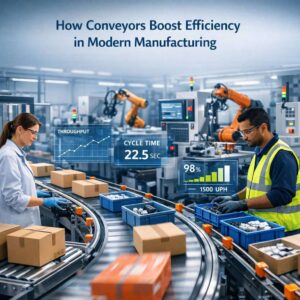
- Increased productivity: conveyors move goods continuously, reducing idle time and accelerating processes.
- Improved ergonomics and safety: handling repetitive lifts and carries can lead to injuries; conveyors minimise manual handling and provide smooth, controlled transport.
- Space optimisation: compact layouts and vertical solutions maximise usable floor space and support higher throughput in smaller footprints.
- Process control and traceability: integration with sensors, scanning, and automated sorting enables accurate tracking and reporting.
- Flexible scalability: modular systems can be expanded or reconfigured as production needs evolve.
- Energy efficiency: energy-efficient motors and regenerative drives help lower operating costs over time.
- Quality and consistency: controlled speed and gentle handling reduce product damage and variation, supporting consistent output.
Typical applications across industries
- Food and beverage: gentle, hygienic belt and modular conveyors for packaging, sorting, and loading.
- Retail and e-commerce: high-speed sortation and parcel handling to optimise distribution.
- Manufacturing: assembly lines with interconnected conveyors for sequential processing.
- Logistics and warehousing: automated storage and retrieval, pallet handling, and order fulfilment.
- Automotive and heavy industries: robust chain and roller conveyors for heavy, bulky parts and subassemblies.
- Pharmaceuticals and chemicals: enclosed, sanitary designs with easy cleaning and material compatibility.
Designing an efficient conveyor line
A well-designed conveyor system considers the entire value chain, from receiving to shipping. Engineers will map the product flow, identify bottlenecks, and select appropriate transitions—such as spur points, diverters, and sorters—so that each station interacts smoothly with the next. Reliability is supported by proper maintenance planning, spare parts strategies, and operator training, ensuring the system remains productive with minimal downtime.
FAQ: Conveyor
What is a conveyor and how does it work?
A conveyor is a mechanical handling system that moves materials from one location to another. It typically uses a belt, roller, or chain to transport items along a defined path, driven by motors and pulleys or gears. Conveyor systems can be configured for horizontal, inclined, or curved routes to fit various facility layouts.
What are the main types of conveyors?
- Belt conveyors: Use a continuous belt to carry items on its surface.
- Roller conveyors: Use a series of rollers to move items, often powered or gravity-fed.
- Chain conveyors: Use linked chains to move heavy or bulky loads.
- Magnetic conveyors: Use magnets to move ferrous materials.
- Overhead conveyors: Suspended systems that transport products above floor level.
- Vertical conveyors: Lift items between different elevations, such as bucket or screw conveyors.
- Modular belt conveyors: Use interconnected plastic modules for flexible routing.
How do I choose the right conveyor for my application?
Consider:
- Load type and weight
- Desired speed and throughput
- Floor space and layout constraints
- Elevation changes (inclines/declines)
- Product handling needs (orientation, accumulation, sorting)
- Environmental conditions (dust, moisture, temperature)
- Maintenance and total cost of ownership
What is belt tension and why is it important?
Belt tension ensures proper tracking and reduces slip. Too loose can cause slippage and misalignment; too tight can wear bearings and shorten belt life. Tension is adjusted using take-up devices or motorised tensioners specific to the conveyor type.
How do I maintain a conveyor system?
- Perform regular inspections for wear, damage, and misalignment.
- Clean rollers, belts, and drive components to prevent buildup.
- Lubricate bearings and moving parts per manufacturer guidelines.
- Check belt tracking and adjust as needed.
- Replace worn parts (bearings, rollers, bushings) promptly.
- Ensure safety devices (emergency stops, guards) are functional.
What safety features are typical on conveyors?
- Emergency stop buttons or switches
- Safety guards and fences
- Gate and access interlocks
- Hazard warning signage and labels
- Pressure-sensitive safety mats
- Lockout/tagout provisions for maintenance
- Safe operating procedures and training for staff
Can conveyors handle different product sizes and shapes?
Yes, many conveyors are configurable to handle a range of sizes and shapes. Options include adjustable belt widths, modular belts, segmented rollers, and adjustable side rails or guards. For irregular or fragile items, specialised conveyors with cradles or gentler rollers may be required.
What is an accumulating conveyor?
An accumulating conveyor spaces out items to prevent contact and allows a controlled buildup of products at the end of a line. It often uses timed or mechanical stops and may be powered or gravity-fed.
How do you troubleshoot a conveyor that won’t start?
- Check power supply and fuses/ breakers.
- Inspect motor and drive motor connection.
- Verify safety switches and guards are engaged.
- Check belt or chain for jams or tension issues.
- Inspect sensors and control logic for faults.
- Review error codes from the control panel or PLC.
- Look for obstructions in the conveyor path.
What are the advantages of modular belt conveyors?
- Flexible routing and customization
- Easier cleaning and sanitation (especially in food/pharma)
- Ability to handle a variety of products
- Lower downtime due to modular components
- Simple replacement of worn modules
How do I integrate a conveyor with other material-handling equipment?
Coordinate with a system designer to ensure compatible control systems (PLC, SCADA), synchronised speeds, correct buffering or accumulation logic, and proper transfer points between conveyors, sorters, scanners, and palletisers. Consider common interfaces, power supply, and space planning.
What maintenance challenges should I expect with roller conveyors?
Roller wear, misalignment, and bearing fatigue are common. Regularly rotate or replace worn rollers, ensure proper roller spacing, maintain lubrication of bearings, and keep the rollers free of debris to prevent jams.
Are conveyors energy-efficient?
Yes, modern conveyors with efficient motors (like AC variable frequency drives or DC drives), regenerative braking, and optimised drive pulleys can reduce energy use. Proper sizing and maintenance also contribute to lower energy consumption.
What innovations are influencing conveyors today?
- Smart sensors and IoT monitoring for predictive maintenance
- Automated sorting, routing, and pick-and-place capabilities
- Robotics integration for loading/unloading
- Energy-efficient drive systems and regenerative braking
- Cleanable, hygienic designs for food/pharma industries
- Modular, reconfigurable layouts for flexible operations
If you have a specific application or industry in mind, I can tailor these FAQs with examples and more precise recommendations.
Maintenance and ongoing optimisation
Regular inspection of belts, rollers, bearings, sensors, and controls is essential. Scheduling routine lubrication, tension checks, and alignment helps prevent unexpected failures. Data-driven optimisation—monitoring throughput, downtime, and energy use—can reveal opportunities to adjust speeds, reconfigure layouts, or upgrade drive components for better performance.
Embracing automation and future-proofing
As operations mature, many facilities move toward more automated solutions, such as integrated sortation, robotic pick and place, and autonomous mobile conveyors. While not every operation needs full automation, adopting scalable options—from modular sections to intelligent controls—allows facilities to grow without a complete system overhaul.
By understanding the strengths and limitations of each conveyor type, managers can design a system that aligns with product requirements, space constraints, and business goals. A thoughtful approach to selection, installation, and ongoing maintenance will deliver durable efficiency, safer workplace practices, and tangible cost savings over time.