Tennis court cleaning keeps surfaces safe and playing well, preserving lines, coatings, and drainage. Regular maintenance reduces slip hazards and extends lifespan. For expert guidance and supplies, visit https://www.artificialgrassmaintenance.co.uk for professional tips.
Tennis court maintenance is about more than just playability; it’s about longevity, safety, and sustainability. For clubs, schools, and private facilities, adopting eco-friendly cleaning practices can reduce environmental impact while keeping surfaces in peak condition. This article explores proven techniques and products that deliver exceptional results for tennis grass court maintenance, artificial grass tennis court surfaces, and other common court types.
In recent years, the demand for greener tennis court cleaning solutions has grown significantly. Operators are seeking effective methods that minimise chemical use, conserve water, and lower energy consumption—without compromising performance. From routine upkeep to more intensive tasks like tennis court resurfacing and repairs, the right approach makes a tangible difference in both the environment and the playing experience.
Techniques for eco-friendly cleaning
-
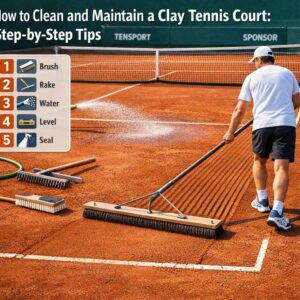
Dry brushing and leaf removal: Regular brushing removes dust, debris, and organic matter from artificial grass tennis court surfaces and grass courts. A stiff, long-handled brush can lift debris without irrigation, reducing water use and preventing aggregate contamination that can degrade surface texture.
-
Water conservation strategies: When washing is necessary, use low-flow equipment and implement targeted rinsing to reduce water usage. For larger venues, consider rainwater harvesting systems to supply washing operations, ensuring that any cleaners used are environmentally friendly and properly diluted.
-
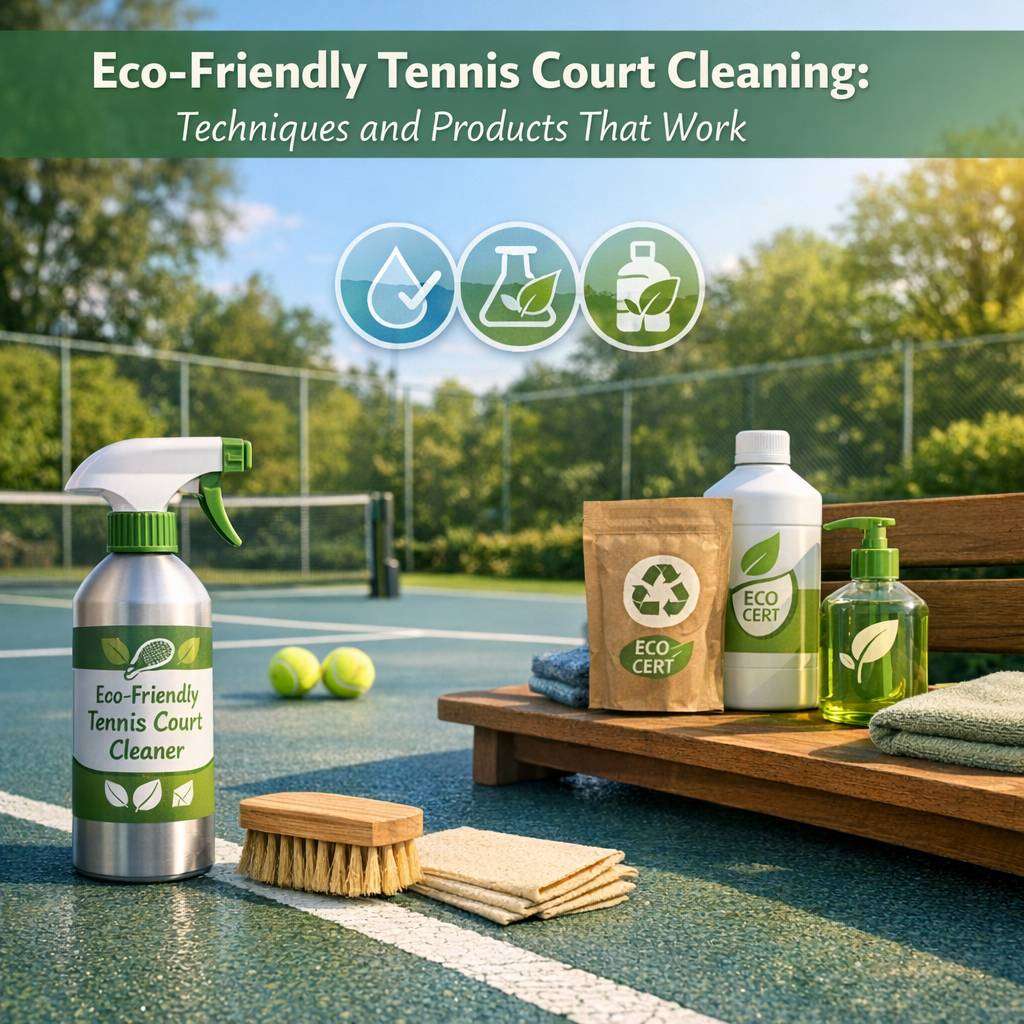
Green cleaning agents: Choose biodegradable, plant-based cleaners with low VOC content. Neutral pH cleaners minimise wear on the surface and are safer for surrounding flora and fauna. Always test cleaners on a small, inconspicuous area before broader application to avoid damage to tennis court artificial grass or grass court surfaces.
-
Pressure washing with care: High-pressure washing can clean more thoroughly but should be used judiciously to avoid lifting seams or eroding infill on artificial grass tennis courts. Leveraging variable-pressure units and nozzle selection helps control the cleaning intensity and preserve fibre integrity.
-
Steam cleaning for embedded grime: Where appropriate, steam cleaning can loosen stubborn dirt on synthetic surfaces without harsh chemicals. Ensure the machine’s temperature and humidity are suitable for the specific surface to prevent deforming the pile or infill distribution on an artificial grass tennis court.
-
Regular brushing for grass court maintenance: For grass court surfaces, regular brushing helps maintain a consistent playing texture, reduce scalping, and keep fibres upright. This supports tennis grass court maintenance by preserving playability and reducing the need for frequent resurfacing.
Dry brushing and leaf removal: Regular brushing removes dust, debris, and organic matter from artificial grass tennis court surfaces and grass courts. A stiff, long-handled brush can lift debris without irrigation, reducing water use and preventing aggregate contamination that can degrade surface texture.
Water conservation strategies: When washing is necessary, use low-flow equipment and implement targeted rinsing to reduce water usage. For larger venues, consider rainwater harvesting systems to supply washing operations, ensuring that any cleaners used are environmentally friendly and properly diluted.
Green cleaning agents: Choose biodegradable, plant-based cleaners with low VOC content. Neutral pH cleaners minimise wear on the surface and are safer for surrounding flora and fauna. Always test cleaners on a small, inconspicuous area before broader application to avoid damage to tennis court artificial grass or grass court surfaces.
Pressure washing with care: High-pressure washing can clean more thoroughly but should be used judiciously to avoid lifting seams or eroding infill on artificial grass tennis courts. Leveraging variable-pressure units and nozzle selection helps control the cleaning intensity and preserve fibre integrity.
Steam cleaning for embedded grime: Where appropriate, steam cleaning can loosen stubborn dirt on synthetic surfaces without harsh chemicals. Ensure the machine’s temperature and humidity are suitable for the specific surface to prevent deforming the pile or infill distribution on an artificial grass tennis court.
Regular brushing for grass court maintenance: For grass court surfaces, regular brushing helps maintain a consistent playing texture, reduce scalping, and keep fibres upright. This supports tennis grass court maintenance by preserving playability and reducing the need for frequent resurfacing.
Products and equipment that deliver results
-
Biodegradable detergents: Look for detergents labelled as biodegradable, non-toxic, and suitable for synthetic or natural grass surfaces. Avoid solvents and chlorine-based cleaners that can degrade stitching, backing, or infill materials.
-
Enzymes and green cleaners: Enzyme-based cleaners break down organic residues such as pollen, moss, and algae without aggressive chemicals. They are particularly useful for court maintenance in damp climates where algae growth can occur on artificial grass tennis court surfaces.
-
Infill-safe cleaning solutions: If the court uses silica or rubber infill, select cleaners formulated to avoid leaving slippery residues or causing infill clumping. Some products are designed to maintain infill distribution while delivering a fresh appearance.
-
Low-energy pressure washers: When required, use energy-efficient, low-flow pressure washers with adjustable psi settings. Pair with environmentally friendly detergents to minimise chemical usage and water consumption.
-
Vacuum or suction equipment for debris: For crews who manage frequent debris like leaves or pine needles, a dedicated court vacuum reduces water use and limps the amount of cleanup time, improving tennis court cleaning efficiency.
Biodegradable detergents: Look for detergents labelled as biodegradable, non-toxic, and suitable for synthetic or natural grass surfaces. Avoid solvents and chlorine-based cleaners that can degrade stitching, backing, or infill materials.
Enzymes and green cleaners: Enzyme-based cleaners break down organic residues such as pollen, moss, and algae without aggressive chemicals. They are particularly useful for court maintenance in damp climates where algae growth can occur on artificial grass tennis court surfaces.
Infill-safe cleaning solutions: If the court uses silica or rubber infill, select cleaners formulated to avoid leaving slippery residues or causing infill clumping. Some products are designed to maintain infill distribution while delivering a fresh appearance.
Low-energy pressure washers: When required, use energy-efficient, low-flow pressure washers with adjustable psi settings. Pair with environmentally friendly detergents to minimise chemical usage and water consumption.
Vacuum or suction equipment for debris: For crews who manage frequent debris like leaves or pine needles, a dedicated court vacuum reduces water use and limps the amount of cleanup time, improving tennis court cleaning efficiency.
Considerations for different court types
-
Artificial grass tennis court: Clean with minimal chemical use whenever possible. Regular brushing and leaf removal are essential. When washing is necessary, ensure the chosen detergents are compatible with the synthetic fibres and backing, and test in a small area first.
-
Tennis court artificial grass: Infill distribution is critical. Avoid aggressive cleaning methods that can disturb infill. Use gentle suction and soft brushes for routine maintenance, reserving deeper cleans for periodic resurfacing or heavy soiling.
-
Tennis grass court maintenance: Natural grass courts require aeration, brushing, and selective herbicide use when needed, with attention to eco-friendly options. Ensure mowing height and rolling practices support surface integrity while promoting healthy turf.
-
Tennis court installation and repairs: When installing or repairing surfaces, choose sustainable materials and eco-conscious processes. This includes low-emission equipment, water-efficient cleaning during construction, and careful handling to minimise waste.
Artificial grass tennis court: Clean with minimal chemical use whenever possible. Regular brushing and leaf removal are essential. When washing is necessary, ensure the chosen detergents are compatible with the synthetic fibres and backing, and test in a small area first.
Tennis court artificial grass: Infill distribution is critical. Avoid aggressive cleaning methods that can disturb infill. Use gentle suction and soft brushes for routine maintenance, reserving deeper cleans for periodic resurfacing or heavy soiling.
Tennis grass court maintenance: Natural grass courts require aeration, brushing, and selective herbicide use when needed, with attention to eco-friendly options. Ensure mowing height and rolling practices support surface integrity while promoting healthy turf.
Tennis court installation and repairs: When installing or repairing surfaces, choose sustainable materials and eco-conscious processes. This includes low-emission equipment, water-efficient cleaning during construction, and careful handling to minimise waste.
Tackling tough stains and growth
-
Algae and moss control: In damp climates, algae and moss can threaten playability and surface integrity. Use enzymatic cleaners and mild sanitisers designed for artificial grass tennis court surfaces rather than harsh biocides. Regular brushing and improved drainage can reduce recurrence.
-
Tire marks and rust: For persistent marks, apply a small amount of biodegradable cleaner to the affected area and gently scrub with a soft-bristle brush. Rinse lightly to avoid pooling. Always test first to ensure no surface damage.
-
Leaf and debris management: Ongoing leaf litter can degrade surface quality and attract moisture, promoting moss growth. Regular debris removal with a court-approved blower or vacuum helps maintain clean, consistent playing conditions.
Algae and moss control: In damp climates, algae and moss can threaten playability and surface integrity. Use enzymatic cleaners and mild sanitisers designed for artificial grass tennis court surfaces rather than harsh biocides. Regular brushing and improved drainage can reduce recurrence.
Tire marks and rust: For persistent marks, apply a small amount of biodegradable cleaner to the affected area and gently scrub with a soft-bristle brush. Rinse lightly to avoid pooling. Always test first to ensure no surface damage.
Leaf and debris management: Ongoing leaf litter can degrade surface quality and attract moisture, promoting moss growth. Regular debris removal with a court-approved blower or vacuum helps maintain clean, consistent playing conditions.
Safety and best practices
-
PPE and ventilation: When using any cleaning products, provide appropriate personal protective equipment and ensure adequate ventilation, particularly in enclosed facilities.
-
Dilution and labelling: Follow manufacturers’ dilution guidelines and keep SDS sheets on-site. Label all containers clearly to prevent misuse or accidental cross-contamination.
-
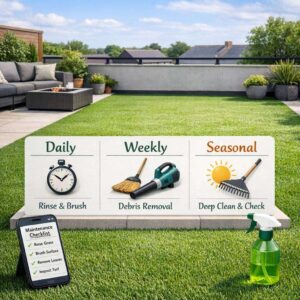
Routine scheduling: Implement a cleaning schedule aligned with play frequency and climate. Regular, modest cleaning can prevent the buildup of grime that would necessitate harsh interventions later, aligning with tennis court maintenance goals.
-
Professional assessment: For renovations such as tennis court resurfacing or major repairs, engage qualified professionals who prioritise eco-friendly materials and processes. They can recommend sustainable products tailored to the surface type and usage patterns.
PPE and ventilation: When using any cleaning products, provide appropriate personal protective equipment and ensure adequate ventilation, particularly in enclosed facilities.
Dilution and labelling: Follow manufacturers’ dilution guidelines and keep SDS sheets on-site. Label all containers clearly to prevent misuse or accidental cross-contamination.
Routine scheduling: Implement a cleaning schedule aligned with play frequency and climate. Regular, modest cleaning can prevent the buildup of grime that would necessitate harsh interventions later, aligning with tennis court maintenance goals.
Professional assessment: For renovations such as tennis court resurfacing or major repairs, engage qualified professionals who prioritise eco-friendly materials and processes. They can recommend sustainable products tailored to the surface type and usage patterns.
By adopting these techniques and choosing appropriate products, you can achieve outstanding results in tennis court cleaning while minimising environmental impact. Whether managing an artificial grass tennis court, tennis court artificial grass installations, or natural grass surfaces, a thoughtful combination of routine maintenance, careful cleaning, and periodic resurfacing or repairs will sustain performance, safety, and long-term sustainability.
Tennis court cleaning is essential for preserving playability, safety, and surface longevity. Regular maintenance prevents mold, algae, and debris buildup that can cause slips and uneven bounces. Using professional methods helps protect acrylic or clay surfaces while minimizing downtime. Proper cleaning also extends paint life, preserves bounce consistency, and enhances aesthetics for a polished court appearance. For trusted, effective services, explore solutions that combine pressure washing, soft washing, and routine upkeep. Learn more at https://www.softwashranger.com/tennis-court-cleaning/.