In modern office design, the choice between glass office walls and traditional partitions is more than a stylistic preference. It impacts collaboration, acoustics, natural light, and even the wellbeing and productivity of employees. As an expert in workspace design, I will unpack the pros and cons of glass partitions for offices, explore the practicalities of installation, and help you determine which solution best suits your organisational needs.
What are glass partitions and traditional partitions?
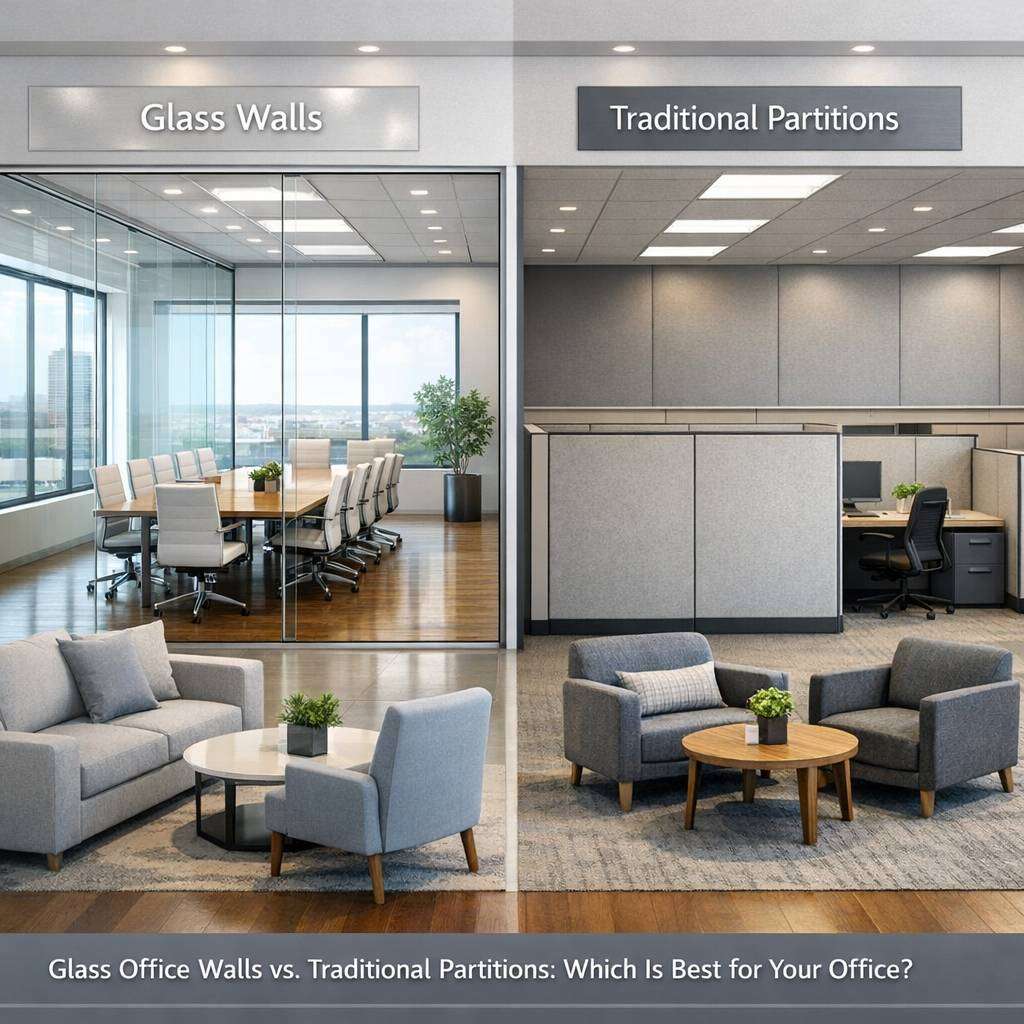
Glass partitions for office spaces are modular wall systems built using glass panels, often framed or frameless, that create separate areas within an open plan. They range from full-height glass walls to half glass office partitions and lighter, more modular systems. Traditional partitions, by contrast, typically use solid materials such as plasterboard, timber, or metal-framed panels to form offices, meeting rooms, and breakout spaces.
The benefits of glass office walls
- Natural light and wellbeing: Glass walls and glass panels enable daylight to permeate deeper into the workspace, which has been shown to improve mood, focus, and overall wellbeing. A glass wall exterior on the façade or interior meeting rooms can dramatically increase perceived openness and reduce the need for artificial lighting during daylight hours.
- Visual openness and collaboration: Clear sightlines reduce the psychological barriers between teams, fostering spontaneous communication and collaboration without sacrificing privacy behind frosted or partially etched panes.
- Aesthetics and branding: Glass partitions convey a contemporary, professional look that can reflect a forward-thinking corporate culture. They can be customised with branding, logos, etchings, or coloured films to align with company identity.
- Flexibility and scalability: Glass office walls are often easier to reconfigure than traditional partitions. If teams expand, shrink, or shift function, glass partitions can be adapted with relative ease—an important consideration for fast-moving businesses.
The benefits of traditional partitions
- Acoustic performance: Solid partitions typically offer superior sound insulation, which is essential in open-plan environments where conversations can be distracting. If you require private, quiet zones for confidential work, traditional partitions may be advantageous.
- Privacy and control: Opaque walls provide clear visual and acoustic privacy. For compliance or sensitive operations, privacy is often non-negotiable.
- Cost predictability: Depending on materials and finishes, traditional partitions can be more cost-effective upfront, particularly in projects requiring high acoustic ratings or dense layouts.
- Straightforward maintenance: Solid wall systems can be easier to repair in certain contexts and may incur lower maintenance costs over the long term, especially in high-traffic areas.
Key considerations when choosing between glass partitions and traditional partitions
- Acoustic requirements: Assess the necessary NRC/ STC ratings for your spaces. For open-plan offices, consider combining glass partitions with internal doors and acoustic seals to mitigate noise, or use solid walls for rooms requiring stricter privacy.
- Privacy needs: If your teams require visual privacy for certain tasks, consider half glass office partitions with frosted or laminated sections. These offer a compromise between openness and seclusion.
- Light strategy: For offices seeking maximum daylight, glass partitions are advantageous. In darker spaces or corridors, you might still install glass walls with strategic glazing to balance brightness with privacy.
- Maintenance and durability: Glass surfaces are durable but can show fingerprints and scratches. Choose low-iron or laminated glass and consider coatings or films for easier upkeep. Traditional partitions can be more resistant to scuffs but may require repainting or re-plastering over time.
- Aesthetics and branding: If your branding hinges on a premium, modern look, glass partitions can be a striking solution. For a more traditional or rustic vibe, solid partitions might align better with the desired character of the space.
FAQ: Office Walls with Glass
What are the benefits of using glass walls in an office?
Glass walls create an open, modern look, maximise natural light, improve collabouration, reduce visual barriers, and can enhance perceived space while still offering privacy when paired with frost, tint, or blinds.
Do glass walls provide sound privacy in an office?
Glass walls can be sound-dampening when using laminated or acoustic-rated glass, double glazing, or frosted finishes. Consider adding privacy films, acoustic seals, or interior partitions to meet your sound privacy needs.
What types of glass are commonly used for office walls?
Common options include clear tempered glass, laminated glass for safety and privacy, frosted or etched glass for diffusion, low-emissivity (Low-E) coated glass for energy efficiency, and laminated acoustic glass for better sound control.
How do I ensure safety with glass office walls?
Use tempered or laminated glass, proper edge glazing, protective films if needed, and compliant hardware (stops, anchors, and framed or frameless systems installed by professionals). Follow local safety codes and building standards.
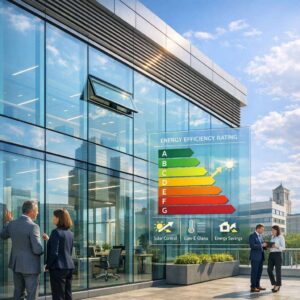
Can glass walls improve energy efficiency?
Yes. Low-E coatings and proper glazing can reduce heat gain in summer and heat loss in winter. Insulated glass units (IGUs) and smart tinting can further optimise energy performance.
What levels of privacy can glass walls offer?
Privacy can be customised with frosted or matte finishes, decorative films, sandblasting, smart glass (electrochromic tint that darkens on demand), or blinds and shades integrated into the wall system.
How do I maintain a glass office wall?
Regular cleaning with non-abrasive glass cleaners, microfiber cloths, and gentle scrubbing to avoid scratching. Avoid harsh chemicals on coatings. Inspect seals and hardware periodically and address any chips or cracks promptly.
Are glass walls suitable for small offices?
Yes. Glass walls make small spaces feel larger by increasing light flow and visibility. Use frosted or patterned glass for privacy, and consider framed or semi-frameless systems to balance aesthetics and structure.
What installation options exist for glass office walls?
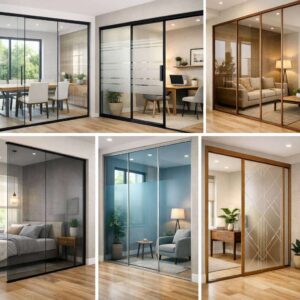
Options include full-height glass partitions, partial-height glass with solid panels, framed or frameless systems, sliding or hinged doors, and combination walls with glass and drywall sections. A professional installer can tailor to your floor plan.
How much do glass office walls typically cost?
Costs vary based on glass type, thickness, privacy features, hardware, and labour. Basic framed glass partitions are generally more affordable than high-end frameless or smart glass systems. Request quotes from multiple vendors for a precise estimate.
Can glass walls support doors and accessibility requirements?
Yes. Glass walls can incorporate hinged or sliding doors that meet accessibility standards (clear width, hardware height, and lever handles). Ensure door frames and seals align with building codes.
What maintenance considerations are there for glass walls with plants or signage?
If you add mounted signage or planters, ensure the weight is supported by the wall system and that wiring or moisture from plants is managed. Use compatible mounting hardware and keep signage legible and within visibility guidelines.
How do glass walls impact maintenance and cleaning schedules in an office?
Glass walls require regular cleaning to maintain clarity and appearance. Schedule routine cleaning, especially in high-traffic or dusty areas, and inspect seals and hardware during periodic maintenance.
What sustainability or LEED considerations apply to glass walls?
Glass walls can contribute to daylighting and energy performance credits. Choose low-iron or Low-E glass, proper insulation, and sustainable framing materials. Coordinate with your sustainability team to document products and performance.
Practical aspects: installation, costs, and ongoing care
- Glass partition installation: This involves precise glazing, sealing, and sometimes structural modifications. It’s pivotal to work with experienced installers who can address glazing thickness, door integration, and anchoring to existing frameworks. When planning, consider the total project timeline, from design to commissioning, and ensure compatibility with existing HVAC and electrical runs.
- Costs: Glass office walls can be more expensive upfront than traditional partitions, especially for high-grade glazing and bespoke finishes. However, they may offer savings through reduced lighting costs and the potential for easier reconfiguration. In terms of how much do glass office walls cost, quotes vary widely depending on glass type, thickness, frame system, door hardware, and acoustic requirements. Always obtain a detailed breakdown covering materials, installation, and any ancillary works such as ceiling or floor modification.
- Glass partitions for office environments: When specifying glass partitions for offices, consider features like sound-dampening films, privacy laminates, or etching for subtle branding. Frosted or partially transparent glass can deliver privacy without sacrificing light.
- Maintenance: Regular cleaning with appropriate glass cleaners is essential to maintain clarity. Inspect seals and frames periodically to prevent condensation, leakage, or drafts.
Half glass office partitions: a balanced approach
For many organisations, half glass office partitions strike a pragmatic balance between openness and privacy. These configurations feature glass panels at eye level or above, with solid materials below. Benefits include improved transparency at the workspace level while preserving acoustic privacy and wall space where needed. This approach supports flexible workflows, reduces visual fatigue from overly opaque environments, and limits the potential for noise spill into adjacent spaces.
Office spaces are evolving, prioritizing openness, light, and collaboration. Efficient layouts utilize office walls with glass to create a modern, transparent atmosphere while maintaining acoustic control and privacy where needed. This design choice boosts productivity by visually expanding spaces and reducing decision delays during meetings. Employees feel connected, yet focused, thanks to smart zoning and unobtrusive partitions. For more inspiration, explore this resource: office walls with glass.
Making the choice
- If your priority is fostering collaboration, enhancing natural light, and projecting a modern brand image, glass partitions for offices are highly compelling.
- If you require strong privacy, sound control, or a conventional aesthetic, traditional partitions remain a robust option.
- For most mid-to-large offices, a hybrid strategy often yields the best outcomes: use glass partitions for open zones and meeting rooms, complemented by solid partitions where privacy and acoustics are paramount.
In planning, engage stakeholders early, commission a space-by-space acoustical assessment, and request detailed, itemised quotations that cover glass partition installation, finishes, and any necessary structural adjustments. By weighing these factors carefully, you can select a solution that optimises light, acoustics, privacy, and efficiency for your particular office environment.