Tennis court cleaning keeps surfaces safe and playable, preventing slips and wear. Regular maintenance protects court material and extends life. For comprehensive solutions, visit https://elgee.com/solutions/detail/indoor-sports-arenas-cleaning-solutions/ to learn more about efficient cleaning plans.
As an expert in tennis court maintenance, I’ve seen how the longevity and playability of a court hinge on a disciplined cleaning routine and timely upkeep. Whether you’re caring for an artificial grass tennis court, a traditional asphalt surface, or an advanced acrylic court, proper cleaning protects colour, grip, and structural integrity. The following step-by-step methods cover common surface types and align with best practices for tennis court cleaning, maintenance, and minor repairs.
Understanding surface types and their needs
Different surfaces require different cleaning approaches and treatments:
- Asphalt and concrete courts are porous and can accumulate algae, efflorescence, and dirt. Regular brushing and washing prevent staining and surface wear.
- Acrylic surfaces, including coloured coatings, rely on gentle cleaning to avoid dulling the finish or compromising the texture that provides grip.
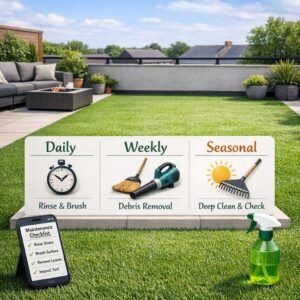
- Artificial grass tennis court surfaces demand debris removal and brushing to maintain fibre uprightness and proper drainage.
Cross-check your surface type before beginning work. If you’re unsure, consult manufacturer guidelines or a professional for tennis court installation or resurfacing advice.
Equipment and materials you’ll need
- Soft-bristle push broom or mechanical power brush
- Garden hose with spray nozzle or low-pressure washer (on a gentle setting)
- Mild, non-ionic detergent or tennis court cleaning solution approved for your surface
- Concrete-safe cleaner for built-up minerals or mould (only if recommended by the manufacturer)
- Scrub brushes of varying stiffness (for stubborn stains)
- Water broom or surface scrubber for larger areas
- Algae and mould treatment suitable for white or coloured surfaces (follow label instructions)
- Protective gear: gloves, eye protection, non-slip footwear
- Squeegee or rollers for water removal
- Sealing or impregnating product (if appropriate for your surface)
- Primer and paint or colour refresh for worn acrylic lines (optional, if resurfacing is planned)
Tennis court cleaning is essential for preserving playability and safety on acrylic hard surfaces. Regular debris removal, pressure washing, and line maintenance keep the surface vibrant and crack-free. For expert guidance and professional services, visit www.artificialgrassmaintenance.co.uk. Consistent cleaning extends court life, reduces slip hazards, and maintains optimal bounce, making your facility look pristine and inviting for players of all levels.
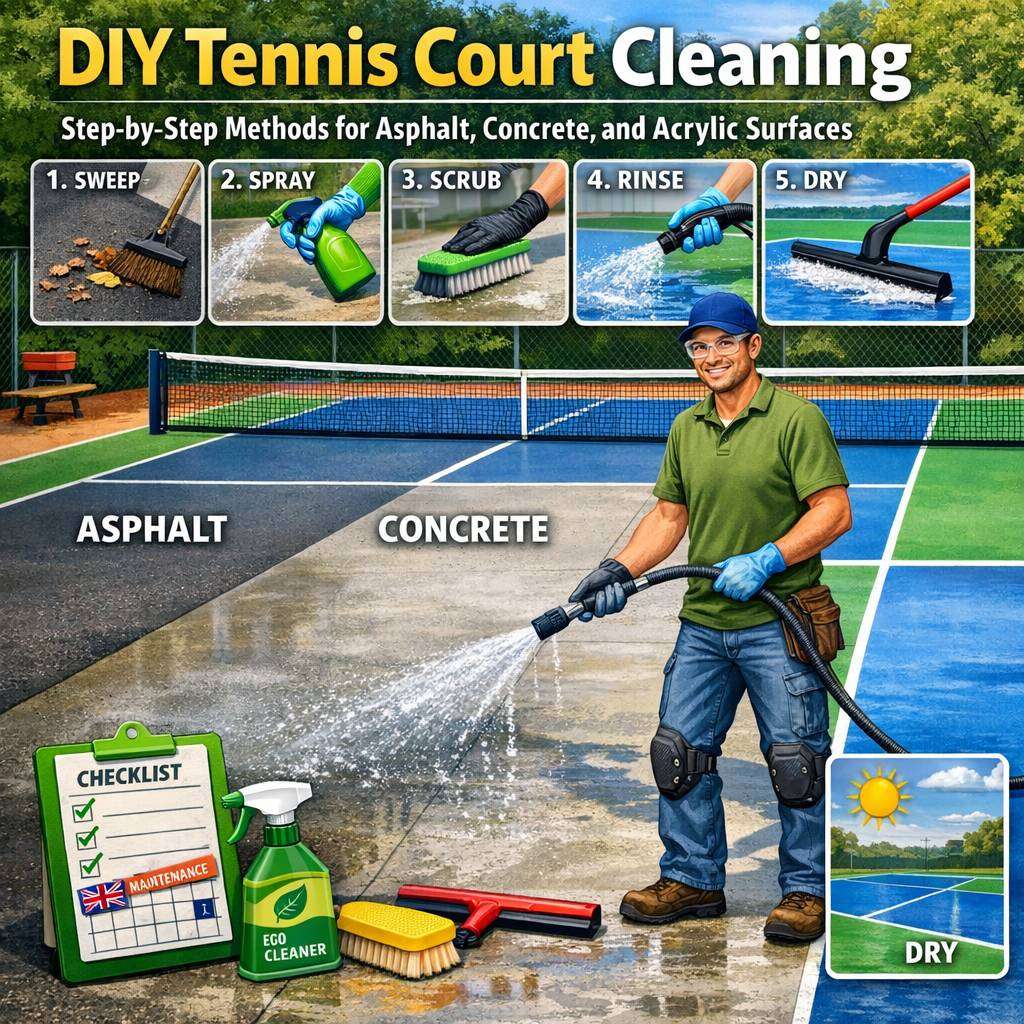
Step-by-step: cleaning an asphalt or concrete court
Clear the court
- Remove all loose debris: leaves, twigs, and stones.
- Check a drainage plan: ensure surface drains aren’t blocked and that water flows away from the playing area.
Dry brush
- Use a stiff-bristle brush to remove surface dirt and detach moss or algae on shaded, damp areas.
- Work in sections, following the court’s slope for efficient drainage.
Wet wash with detergent
- Mix a mild, non-ionic detergent with water in a bucket or sprayer. Avoid strong acids or solvents that can degrade the surface.
- Apply cleaning solution to a small area at a time and scrub with a soft or medium brush. For larger courts, a power washer on a low setting can help but avoid high pressure that can erode the surface.
Rinse thoroughly
- Rinse the entire surface with a gentle spray, ensuring all soap residues are removed. Residue can attract more dirt and affect adhesion for future coatings.
Treat stains
- For stubborn stains (oil, tyre marks, or mineral deposits), use a compatible cleaner advised by the manufacturer. Always test a small area first and avoid harsh chemicals.
Dry and inspect
- Allow the court to dry completely. Inspect for any permanently discoloured areas or unevenness that may indicate subsurface issues requiring tennis court maintenance or repairs.
Periodic maintenance plan
- Create a schedule for regular brushing, seasonal cleaning, and annual evaluation for resurfacing or repairs. This helps extend life before major tennis court resurfacing becomes necessary.
Step-by-step: cleaning an acrylic-coated court
Pre-clean and remove debris
- Clear the court of organic matter, then lightly sweep to remove surface dust and seeds.
Gentle washing
- Use a mild detergent and soft brush. Acrylic surfaces can be sensitive to harsh cleaners and abrasive pads.
Rinse with care
- Rinse with low-pressure water, ensuring complete removal of cleaning agents to prevent streaking or slippery patches.
Algae and mould management
- If damp, shaded areas show mould, apply an approved mould cleaner following the label. Rinse thoroughly after treatment.
Inspect the acrylic layer
- Look for chalky patches, fading, or wear. For minor wear, a maintenance coat or light touch-up can refresh the surface without a full resurface.
Avoid direct sun curing
- If applying any sealers or refresh coatings, plan for cooler parts of the day to avoid rapid drying that can cause cracking.
Sub-heading: tennis court maintenance for artificial grass tennis court surfaces
Brushing as a core routine
- Regular brushing helps stand the fibres upright and maintain surface play characteristics. Use a soft to medium-bristle brush, with longer strokes along the court’s length.
Debris and moss control
- Remove leaves and organic debris promptly. In shaded or damp zones, treat with an appropriate anti-moss solution suitable for artificial grass, following product guidelines.
Drainage and infill checks
- Periodically check infill levels and drainage. Uneven infill can affect ball bounce and player safety.
Seasonal care plan
- For artificial grass, the maintenance plan should include annual or biannual checks for seam integrity and infill top-ups. Consider professional tennis court repairs or installation refresh if wear is pronounced.
Step-by-step: post-cleaning inspection and repairs
Inspect the surface integrity
- Look for cracking, potholes, or delamination on asphalt and concrete surfaces. Note any faded lines or worn edges.
Minor repairs
- Fill minor cracks with a compatible crack filler. For severe cracking or subsurface issues, consult a professional for tennis court repairs or resurfacing.
Line work and resurfacing prep
- If the acrylic surface shows significant wear, plan for a tennis court resurfacing project, including reapplication of lines and a uniform surface finish.
Surface protection
- After cleaning, consider sealants or protective coatings recommended for your surface type. These can extend life by reducing water ingress and staining.
Documentation
- Maintain records of cleaning dates, products used, repairs performed, and notes on surface condition. This helps guide future tennis court maintenance and informs decisions on tennis court installation or resurfacing.
Tennis court cleaning keeps surfaces safe and performance-ready, extending playtime and preserving court integrity. Regular debris removal, mold control, and pressure washing reduce slick spots and wear. Visit the service page for expert solutions: https://zapitwash.com/tennis-court-cleaning/ for professional results and lasting cleanliness.
When to call in the pros
- Persistent cracking, significant surface deterioration, or drainage problems not resolved by cleaning.
- Recurrent mould or algae growth in shaded areas despite cleaning.
- Surface delamination, fading lines, or poor bounce that affects playability and safety.
- Requests for tennis court resurfacing or major repairs that require professional equipment and expertise.
Maintaining an exemplary playing surface through regular tennis court cleaning and maintenance is a long-term investment in play quality and safety. Whether you manage a professional facility or a residential court, adopting a disciplined routine and knowing when to seek tennis court resurfacing or other major upgrades will help you preserve the surface and extend its life. This approach supports ongoing tennis court installation quality, and ensures your artificial grass tennis court or solid acrylic surface continues to perform at peak level.