Clay courts demand a specific routine to preserve playing quality and longevity. This guide provides expert, practical steps to keep a clay surface in top condition, addressing cleaning, maintenance, and common upkeep tasks. By following these processes, club managers and homeowners can extend the life of their court and ensure consistent playability.
Clay courts, though often associated with traditional red brick dust, require careful management to avoid compaction, uneven textures, and surface contamination. Regular attention to brushing, watering, and compaction control helps maintain a true bounce and safe playing conditions. This article presents practical, step-by-step instructions suitable for both new installations and established facilities.
Tennis Court Maintenance
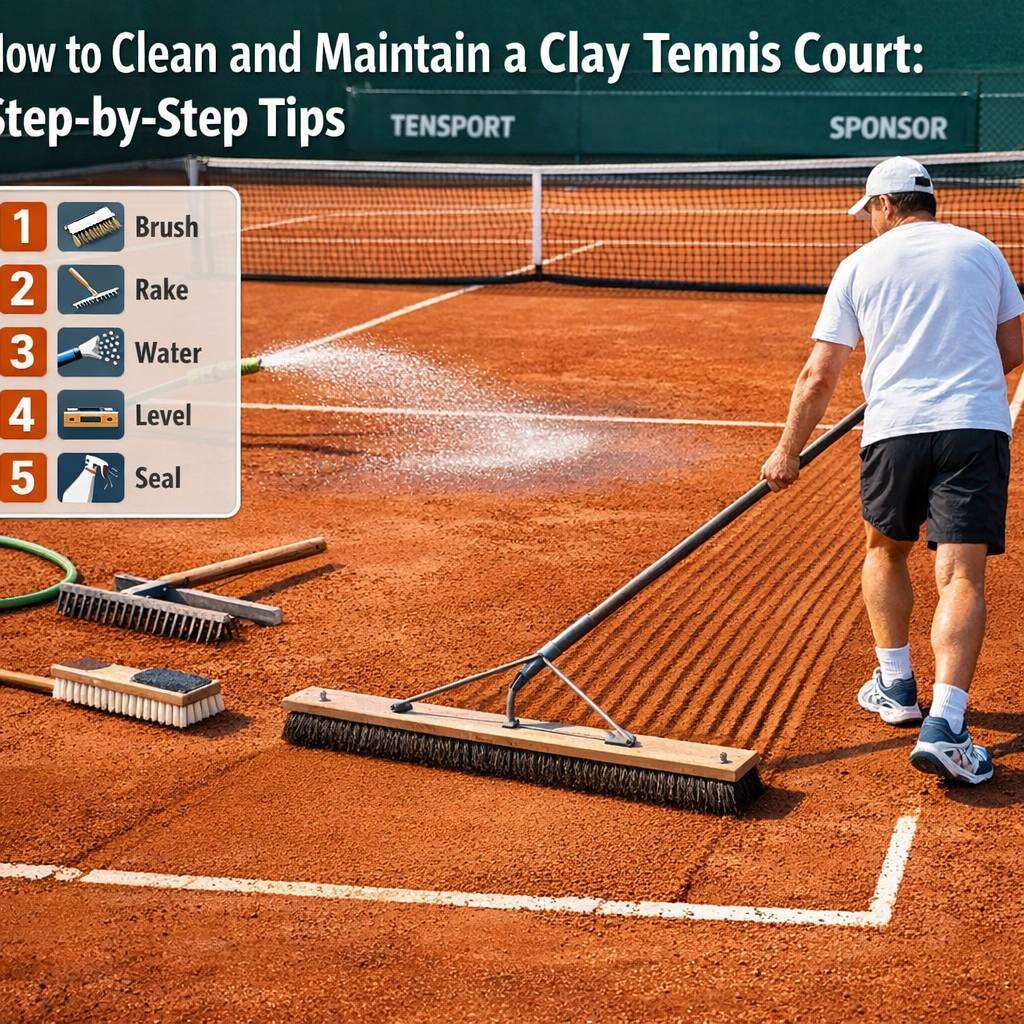
- Daily checks: Inspect the court for coarse debris, puddling, and edges where the surface may be thinning. Clear leaves and organic material using a specialised softer broom to prevent damage to the surface.
- Brushing routine: Use a wide, semi-rigid drag brush to redistribute surface material after rain or heavy traffic. Brushing should be performed in multiple directions to avoid creating ridges and to preserve an even playing surface.
- Watering strategy: Water lightly after brushing to consolidate the surface, but avoid over-wetting. The goal is to achieve a slightly damp bond that aids cohesion without becoming slippery.
- Debris control: Enforce a no-dust policy during play. Regularly sweep or drag to keep fine particles from scattering, which can affect ball bounce and surface cohesion.
- Drainage considerations: Ensure that drainage channels and edge drains are clear. Standing water accelerates clay movement and can damage the sub-base over time.
Tennis Court Artificial Grass
While the term “artificial grass” is more commonly associated with synthetic turf, certain hybrid systems use artificial grass components to stabilise the surface or create hybrid courts. When relevant, the following practices help maintain such configurations:
- Surface integration: If your court incorporates artificial grass layers, keep joins and seams free of loose fibres. Regularly inspect for movement that could affect the ball’s bounce or the court’s level.
- Brush and relocate infill: Use a light back-and-forth grooming motion to keep artificial fibres upright. If infill begins to migrate, redistribute it evenly to maintain surface consistency.
- Clean interfaces: Clear around edges where the artificial grass meets clay to prevent debris intrusion into the clay layer, which can alter moisture retention and surface texture.
Artificial Grass Tennis Court
For courts with artificial grass as the top layer or as a hybrid element, maintenance is slightly different from traditional clay alone:
- Brushing technique: Employ a dedicated artificial grass brush to lift fibres and maintain an even playing surface. Regular brushing reduces matting and prolongs fibre life.
- Infill management: Monitor silica or rubber infill levels and replenish as needed according to the manufacturer’s guidelines. Uneven infill can create inconsistencies in ball bounce.
- Limescale and algae control: In shaded or damp conditions, occasional cleaning with a mild plant-based cleaner can prevent mould growth on the edges or joints. Ensure all products are compatible with the grass system.
Tennis Court Installation
A proper installation lays the foundation for long-term maintenance and performance:
- Base preparation: A well-compacted sub-base with appropriate drainage is essential. Any voids or insufficient compaction can lead to cracks and uneven play.
- Surface binder: Clay surfaces require a binder or stabiliser to improve dust resistance and cohesion. Ensure the product is compatible with the local climate and usage level.
- Edge protection: Install robust trim and edging to prevent surface loss near boundaries. Proper edging helps retain the surface material during brushing and resconstruction.
Tennis Court Repairs
Over time, courts may require targeted repairs to maintain playability and safety:
- Patching: Address worn areas by applying appropriate clay patches and re-compacting. Use methods that blend with the original texture to avoid disruptive contrasts in bounce.
- Cracking and settlement: Small cracks should be filled promptly with compatible material to prevent water infiltration and further movement.
- Surface retexturing: If the surface becomes too compacted or uneven, retexturing may be necessary. This involves scarifying, re-sprinkling clay, and brushing to restore uniform playability.
Tennis court cleaning enhances playability and longevity, ensuring smooth surfaces and safe traction for players. Regular maintenance reduces grime buildup and preserves color. For expert results, consider professional services: https://www.tritonexteriorcleaning.com/residential-pressure-washing-long-island/tennis-court-cleaning and schedule timely cleanings.
Tennis Court Resurfacing
Resurfacing is a more substantial maintenance operation typically performed at longer intervals:
- Timing: Plan resurfacing based on court usage, climate, and wear rate. Higher traffic courts may require more frequent resurfacing.
- Material selection: Choose a clay mix appropriate for your climate and playing style. Some facilities opt for stabilised or resin-enhanced clays to reduce dust and enhance resistance to wind erosion.
- Process overview: The resurfacing workflow generally includes removal of loose material, surface levelling, reapplication of clay, and a full brushing cycle after placement. Follow manufacturer guidance for curing times and initial harbouring of moisture.
Tennis Court Cleaning
- Regular debris removal: Clear leaves, seeds, and other debris after every match or daily use. Debris can hold moisture, promote mould, and hinder proper surface drying.
- Dust control: Periodically rake and brush to control dust and fine particles that may clog drainage channels and affect surface texture.
- Weather considerations: After rain, wait for the court to reach a manageable moisture level before brushing. Brushing a too-wet surface can lead to clay clumping and uneven distribution.
- Algae and mould prevention: In damp environments, treat the court with an approved algaecide or mild cleaning agent that is safe for clay and any artificial components if present. Rinse thoroughly after application.
By embracing these steps as part of a structured tennis court maintenance programme, you can prolong the life of your clay surface, preserve consistent ball bounce, and reduce the frequency of major repairs. For facilities integrating artificial grass elements, or for those planning tennis court installation or resurfacing, consult with specialist contractors who understand the nuances of clay and synthetic surfaces to ensure a high standard of play and durability.
Tennis court cleaning is essential for preserving playing Surfaces, safety, and aesthetics. Regular sweeping, debris removal, and careful power washing prevent staining and deterioration of surfaces and nets. Effective maintenance also protects line markings and reduces slip risks on courts. For more comprehensive guidance and services, visit the resource below. https://www.artificialgrassmaintenance.co.uk
Tennis court cleaning is essential for preserving surface quality, safety, and longevity. Regular brushing, debris removal, and careful pressure washing remove dirt, algae, and mold that can degrade traction. Proper maintenance reduces wear, minimizes slipping, and extends playability across seasons. For detailed guidance and expert tips, visit the resource linked below. http://www.hindingtennis.com/website/publish/maintenance/index.php?All-Weather-Court-Care-7
Tennis court cleaning is essential for maintaining playability and safety on surfaces. Regular maintenance prevents wear, preserves surface integrity, and extends life. For tailored advice and services, visit artificialgrassmaintenance.co.uk today. Our experts ensure pristine courts.