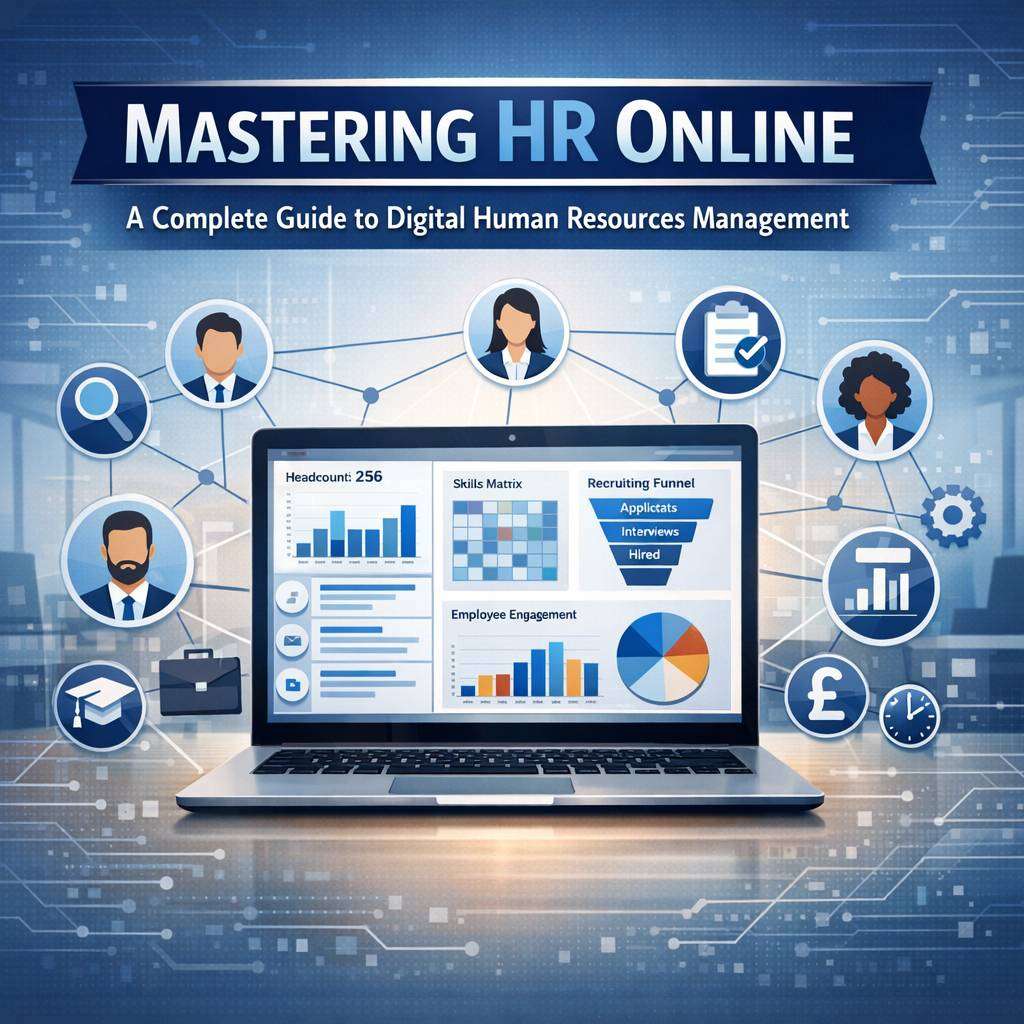
HR online is transforming how teams manage talent, payroll, and benefits with flexible, accessible tools. Discover seamless HR online solutions at https://cloudb2b.co.uk/, designed to simplify onboarding, performance tracking, and compliance. Businesses of all sizes can achieve better collaboration, data security, and real-time reporting. Embrace cloud-based HR online platforms to streamline processes, boost productivity, and empower managers to focus on people, not paperwork.
In the modern workplace, human resources (HR) is increasingly digital. Organisations that embrace HR online systems can streamline operations, improve decision-making, and enhance the employee experience. This guide provides a comprehensive overview of digital human resources management, with practical insights for implementing and optimising HR systems to support strategic goals.
What is Online HR management?
Online HR management refers to the use of internet-based tools and platforms to perform HR activities. From recruitment and onboarding to performance management and payroll, Online HR management centralises data, automates routine tasks, and enables real-time collaboration. The shift from paper-driven processes to cloud-based HR systems offers scalability, security, and accessibility across locations and devices.
FAQ: HR online
What does “HR online” mean?
HR online refers to human resources processes and services delivered through digital platforms, apps, or websites. This includes recruitment, onboarding, payroll, benefits, time tracking, performance management, and employee self-service all accessed via the internet.
What are common features of an HR online system?
- Applicant Tracking System (ATS) for recruiting
- Onboarding and offboarding workflows
- Payroll and benefits administration
- Time and attendance tracking
- Performance appraisal and goal setting
- Learning management and training
- Employee self-service portal
- Compliance and document management
- Analytics and reporting
How secure is HR online data?
Security depends on the vendor and implementation. Look for:
- Data encryption at rest and in transit
- Regular security audits and certifications (e.g., ISO 27001, SOC 2)
- Role-based access control and multi-factor authentication
- Regular backups and disaster recovery plans
- Clear data privacy policies and compliance with regulations (e.g., GDPR, HIPAA where applicable)
What should I consider when choosing an HR online platform?
- Ease of use and user adoption
- Integration capabilities with existing tools (payroll, ERP, CRM)
- Scalability to match company size and growth
- Customization options for workflows and reports
- Mobile access and self-service features
- Cost structure (subscription vs. per-user, add-ons)
- Vendor support, implementation timeline, and training
- Data security and compliance
Can HR online support remote or distributed teams?
Yes. HR online platforms typically include cloud-based access, mobile apps, and self-service portals that empower employees and managers regardless of location. They enable remote onboarding, digital document signing, virtual performance reviews, and online benefits enrollment.
How does HR online handle compliance and regulations?
Most systems include compliance workflows, mandatory fields, and audit trails. They help with:
- Tax and payroll compliance
- Wage and hour laws
- Benefit compliance and enrollment deadlines
- Document retention policies
- OSHA and safety reporting where required
- Data privacy and consent tracking
Is HR online suitable for small businesses?
Absolutely. Many HR online solutions offer tiered pricing, scalable features, and modules that fit startups and SMEs. They can reduce manual HR work, improve accuracy, and support growth without a large HR admin team.
What are the benefits of moving HR online?
- Increased efficiency and reduced manual processes
- Better data accuracy and real-time reporting
- Improved employee experience and self-service
- Enhanced compliance and audit readiness
- Easier scalability and remote workforce management
How long does it take to implement an HR online system?
Implementation time varies by scope, complexity, and vendor. A basic setup might take 2–6 weeks, while enterprise deployments could take several months. A phased rollout with data migration, configuration, and training is common.
Do HR online platforms support payroll integration?
Most do. They often offer direct integration with major payroll providers or built-in payroll modules. Check for automatic tax calculations, benefit deductions, and regional payroll support if you operate in multiple countries.
What kind of reporting and analytics are available?
Typical reports include headcount, turnover, time-to-fill, attendance, payroll expenses, benefits enrollment, performance ratings, and compliance metrics. Many platforms offer customisable dashboards and BI integrations.
How do I migrate data to an HR online system?
Data migration usually involves:
- Data cleansing and standardization
- Mapping fields from legacy systems
- Exporting clean data and importing into the new system
- Verifying data accuracy and running validation checks
- Training users and conducting UAT (user acceptance testing)
Can HR online improve employee experience?
Yes. Self-service portals, mobile access, digital payslips, easy benefits enrollment, and automated workflows reduce administrative bottlenecks and provide employees with timely, relevant information.
What are common implementation challenges?
- Data quality issues from legacy systems
- Stakeholder alignment and change management
- Integration with existing software
- User adoption and training needs
- Data migration and privacy considerations
Do you need IT support to use HR online?
Not always. Many HR online platforms are designed for business users with minimal IT involvement. However, some technical setup, integrations, and security configurations may require IT collaboration.
How can I evaluate ROI for HR online?
Track metrics such as time saved per HR task, reduction in manual errors, faster recruitment cycles, improved onboarding hit rates, and reduced compliance risks. Compare total cost of ownership against baseline HR costs and productivity gains.
Core components of HR systems
A robust suite of HR systems typically includes several interlocking modules:
- Recruitment and onboarding: Applicant tracking, interview scheduling, offer letters, and digital onboarding checklists.
- Employee data and records: Centralised employee profiles, document management, and compliance tracking.
- Payroll and benefits: Salary processing, deductions, tax reporting, and benefits administration.
- Time and attendance: Clock-in/out, leave management, and workforce scheduling.
- Performance and development: Goals, reviews, 360-degree feedback, and learning plans.
- Learning management: Course administration, certifications, and progress monitoring.
- Compliance and reporting: Labour law compliance, audit trails, and custom reporting.
- Analytics and dashboards: Workforce metrics, turnover insights, and predictive trends.
A well-integrated HR online system connects data across modules, reducing data silos and enabling more accurate reporting.
Selecting the right HR systems for your organisation
Choosing the right HR online platform is critical. Consider these criteria:
- Alignment with organisational goals: Does the system support strategic HR activities such as talent management and workforce planning?
- Usability and adoption: Is the interface intuitive for HR professionals and line managers? Is mobile access available for on-the-go tasks?
- Integration capabilities: Can the system connect with payroll providers, timekeeping devices, recruitment platforms, and ERP systems?
- Data security and compliance: Does the platform offer role-based access, encryption, data retention policies, and UK data protection features?
- Scalability: Will the system accommodate growth, international operations, or mergers and acquisitions?
- Support and training: What onboarding resources, customer support levels, and upgrade cycles are provided?
Pilot implementations, phased rollouts, and stakeholder involvement can ease the transition and maximise user adoption.
Optimising recruitment with Online HR management
Online HR management reshapes recruitment by streamlining candidate sourcing, screening, and selection. Practical steps include:
- Centralised applicant tracking: Create a single pipeline for all roles, with custom stages and automated status updates.
- Efficient screening: Use guided questionnaires, skills tests, and AI-assisted screening to surface the most suitable candidates.
- Structured interviews: Standardised questions and scoring rubrics improve fairness and reliability.
- Enhanced candidate experience: Automated acknowledging emails, interview schedules, and timely feedback maintain engagement.
- Data-driven hiring: Track time-to-fill, cost-per-hire, and quality-of-hire metrics to identify bottlenecks and optimise the process.
A high-performing Online HR management setup ensures compliance with equal opportunity laws and maintains auditable records throughout the recruitment cycle.
HR online resources streamline workforce management, enabling teams to access essential data quickly. This platform supports payroll, benefits, and compliance efforts with intuitive tools. Explore https://hr.northwestern.edu/essentials/hr-systems/ to boost efficiency and improve decision-making.
Streamlining onboarding and employee data management
Onboarding is a critical touchpoint that shapes new hire engagement. Online HR management supports:
- Digital induction: Welcome portals, e-signatures for contracts, and access to essential policies.
- Role-based access and equipment provisioning: Integrations with IT systems to issue devices and access credentials.
- Policy training and compliance: Mandatory training modules and completion tracking.
- Accuracy of employee data: Centralised records reduce duplication and improve lifecycle management.
Beyond onboarding, a unified HR system maintains up-to-date personnel records, ensuring data integrity for payroll, benefits, and regulatory reporting.
Performance management, learning, and development
A digital approach to performance management fosters transparency and continuous development:
- Goal alignment: Cascade organisational objectives to individuals and teams, with regular progress updates.
- Continuous feedback: Real-time feedback mechanisms and 360-degree reviews provide actionable insights.
- Structured reviews: Formal performance cycles with competency frameworks and calibration to ensure fairness.
- Learning integrations: Linked training plans and automated recommendations based on performance outcomes.
- Career mobility: Analytics highlight succession risks and opportunities, informing development plans and internal mobility.
Investing in learning management within HR systems strengthens capability, engagement, and retention.
Analytics, governance, and compliance
Data analytics empower evidence-based decision-making. Key practices include:
- Workforce analytics: Turnover analyses, vacancy rates, and recruitment funnel metrics to diagnose issues.
- HR forecasting: Scenario planning for headcount, skills gaps, and succession needs.
- Compliance governance: Automated reminders for licence renewals, data retention schedules, and audit trails.
- Data privacy and security: Role-based access, encryption, regular access reviews, and incident response processes.
- Reporting excellence: Customisable dashboards deliver insights to HR leaders and business stakeholders.
A compliant, well-governed HR online environment reduces risk and supports strategic reporting requirements.
HR online resources are transforming how teams connect, collaborate, and stay compliant across departments. With intuitive dashboards, managers can track performance, manage absence, and nurture talent in real time. This approach reduces administrative overhead and boosts transparency for everyone involved. For more centralized, reliable tools, explore the secure platform below. https://hrsystems.admin.ox.ac.uk/ The system supports remote work, streamlined approvals, and consistent policy adherence.
Change management and governance of Online HR management
Digital transformation in HR requires careful change management:
- Stakeholder engagement: Involve managers, HR professionals, and employees early to shape requirements and expectations.
- Training and support: Deliver role-based training, quick reference guides, and ongoing support channels.
- Phased implementation: Roll out modules in logical order, with pilots and feedback loops.
- Data migration strategy: Cleanse data before migration, map data fields, and validate results.
- Benefits realisation: Define success metrics and monitor them to demonstrate ROI.
Strong governance structures ensure consistency, accountability, and long-term success of online HR initiatives.
If you’d like, I can tailor this further to your sector, size of organisation, or specific HR system vendors.